
After The Future
Reflections on a new/old Canon Blue album.

I wrote this record over six years ago. And it sounds like it.
Not in the obvious way, in that it sounds dated or from a different time, but more that it sounds like the person I was six years ago. Someone that I no longer recognize and, truthfully, am a bit embarrassed by. Today is my 43rd birthday, which feels like the right time to reflect on what After The Future is, why I’m releasing it now and all the places my mind has been over the past handful of years.
One of my initial forays into music was through an indie solo project called Canon Blue. It gave me some of my favorite musical memories over the years — namely my years touring, recording and collaborating with the Danish band Efterklang. They were the first ones to really believe in the project. I released my first few albums on their label, Rumraket, and they produced my second record Rumspringa with me in Copenhagen and Reykjavík. Later, I met and partnered with one of the best humans, Jeremy DeVine at Temporary Residence, who generously supported the project as well. In a full circle moment, many of my Copenhagen friends contributed to After The Future (Casper, Rasmus and Mads from Efterklang, Katinka Fogh Vindelev, Christian Balvig) and took it further than I ever could on my own.
In most other ways, to me, Canon Blue was largely a professional failure — never really materializing into anything significant (I’ve barely made a penny off of it all these years later). It is a project whose aims have shifted and changed a thousand times, before it was finally relegated to the basement of my creative house while more pressing, fun and commercially viable projects took precedent.
The songs for this album, After The Future, were largely written during a feverishly chaotic two-week window in the early spring of 2020. It was the first time in years that I sat down and decided to make something for myself, and I had about twenty songs in various shapes and forms show up. Like so many other creative endeavors of that plague Covid era, it couldn’t help but feel mixed up in politics and racial reckonings and what felt like the backsliding of an entire culture (and still does). All of this runs throughout the record — external conflicts creating a shell around internal conflicts of my own spiritual reckoning, midlife mental health crisis and a desire for something new that wouldn’t really come into focus for a few more years.
During those first heady isolated months, I was reading a lot. In particular, On Earth We’re Briefly Gorgeous by Ocean Vuong and How To Do Nothing by Jenny Odell. Various lines and ideas found their way into lyrics and titles, and it was in the latter where I first read “After The Future” — itself a reference to a book of the same name by Franco Beradi. The title stuck for many reasons, but ultimately came to symbolize the direction we imagine our lives going, and the future we end up finding instead. To a chronically depressed and creatively stuck person (raises hand), the present was at times unbearable, and the past was only more memories of unbearable presents, so that all that remained was a future that held the potential of something different. Just maybe. The future was where I went to live as a last refuge.
As a recovering perfectionist, I often demanded too much of Canon Blue and what it was “supposed” to do or be for me. As a result, it became disfigured, stagnated and felt like a wounded animal retreating from me until I got too tired of chasing it. I decided on the name Canon Blue back in 2002, and there generally seem to be four, five or six years between each of the albums — a paralyzation of expression. In each intervening year, I’ve searched for a different articulation of my solo work, but over and over again the unfinished album has haunted me. It’s time to truly move on, to go back, bury something and give it a final farewell ceremony.
Every death deserves a proper burial, and I suppose that’s what releasing this record today is for me. I’ve moved four times since I wrote these songs, experienced loss and birth, beginnings and endings, and everything in between. The twenty-two year-old who started Canon Blue longed to be in a successful band of his own. Dreams shifted, evolved and changed over the years. And that’s what made it harder to finish — as the person who wrote twenty songs in two weeks faded from view, the way back into the songs became less obvious and harder to find. A few winters ago, I flew to Copenhagen to try to get inspired to finish it, but it was only recently, in this last-ditch effort to move on to something new, that I was able to salvage what I could and call it a day. The earnestness, the melodrama, the half-hearted attempts of articulating a political statement or religious commentary. Lyrics have always been the hardest for me. Most of the record I cringe at and feel myself trying too hard — a document of a person in process — someone I recognize, but no longer am. There are few moments that are still interesting to me, little glimmers of a path I didn’t follow.
Musically it’s more of the same Canon Blue sounds, jumping from icy Scandinavian electronics to distorted choral arrangements, to polyrhythms and electronic beats, to ambient and field recordings. I was exploring, trying to uncover something new. After The Future is really a record for myself (and this post probably, too, so thank you for reading this far) but rather than let it sit in darkness, I’m putting it out into the world.
Getting over the fear of being perceived or judged is one of the hardest moves an artist has to make — however small the audience is/was. It’s something I’ve only managed to do three other times (records) in my life as a solo artist. Creatives are meant to create. It sounds simple enough but if you cease to make things, the part of you that depends on that vitality tends to rot and fester. Eventually it atrophies and the damage can start showing up in other parts of your creative life and in your very real body. For me, I attributed my long-term stagnation to the idea of being scrutinized and having the public experience something I made.
I named my first record Colonies (2007) because I grew up in Williamsburg, Virginia, and had lived in Bristol, England and New Orleans, Louisiana — three major cities in the dark history of colonialism, that also seemed to mirror the darkness I felt in the aftermath of Hurricane Katrina drowning the city I was living in. Rumspringa (2011) represented creative freedom and independence, as well as the beginnings of a spiritual shift, and Lasso Yo (2017) explored the complicated relationship to self, my past and where I was hoping to be. After The Future (2026) picks up from there with the realization that not every road runs forever.
As the old song says, “everything’s bullshit, but the open hand” and in the end, the only true place to create from is from yourself, and for yourself. No matter how scary or ugly that self looks in the mirror. When you change who you are to fit into other people’s processes, or fabricate a judgmental audience, that is where the devil can get you, and I, for one, am tired of being other people.
Canon Blue got me out of my small hometown and onto a musical path that would eventually become my entire life. So this is the last landmark, LP4, and I’m grateful but moving onward.
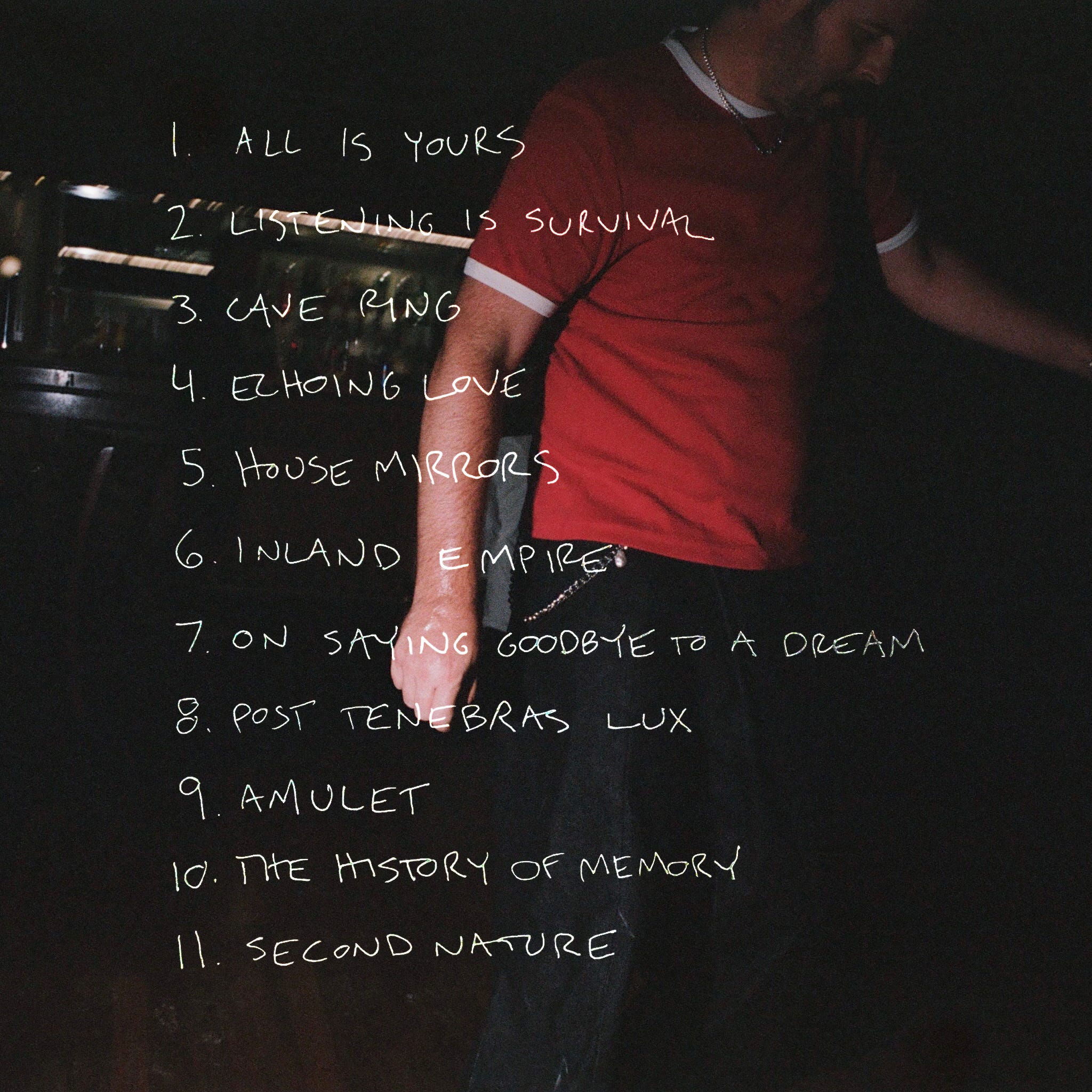
After The Future is out today on streaming platforms. Thanks for listening.
You are a talented writer, Daniel. (Words and sounds!) I think it’s the age, too. I was just talking to my friends about what our ideas of success even are and how we have made it impossible for ourselves to reach it. I just wanted to leave a note saying that I feel you on being chronically depressed and creatively stuck, but in so many eyes you seem extremely unstuck and successful. :) Thanks for sharing your work with us. It’s not a small feat to bring others’ art to the surface, either, and you seem to be really amazing at that.
Finally had the time to give it a proper listen, and you are right- there is a melancholy to it that is very much of its time. I would have been surprised if you said you wrote this lately, after what I heard from you over the last year- namely Ego Death (as much a HW album as it is yours, IMHO) and Power Snatch.
There is a German saying that's very much overused, so I usually mock it a bit, but it goes: "You have to let go to free your hands."
In this case, it's probably very fitting. I strongly relate to letting go of something "unfinished" to make way for the new, though.
One thing I learned from making physical "art" (as in stuff that has no other purpose than to be cool) is that no one will examine it as closely as yourself. With physical things, it's literally about taking a step back to see the whole picture rather than obsessing over details that only show up from up close. Also, oneself is always the harshest critic.
That's probably a bit nebulous to implement in non-physical art like music or writing, but it helps me a lot in many cases. I guess it's also a lot easier for art that isn't as closely linked to emotions as making music or writing.
Anyways, congratulations on your LP, on Canon Blue getting you where you needed to be, belated happy birthday and here's to letting go and making cool new stuff!
P.S. I love Lasso Yo, and what it brought to Dead Horse and Love Me Different especially!